The First 50 Runs Rule: How Your Early Season Sets the Ceiling on Everything That Comes After
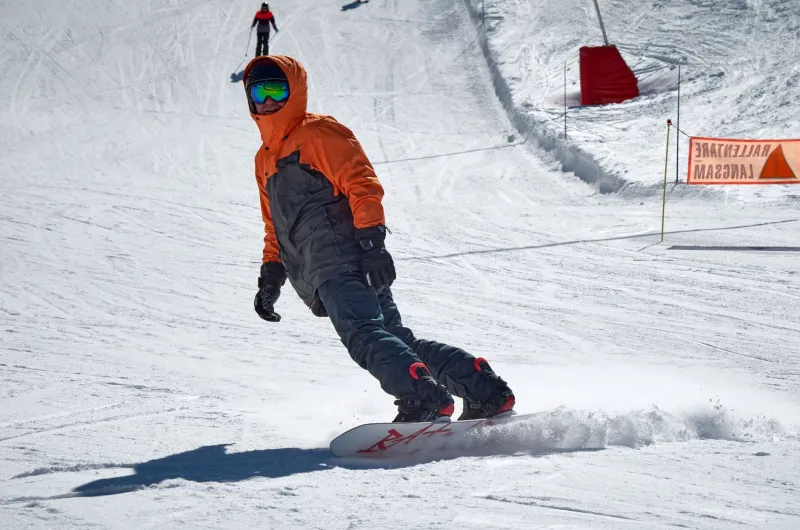
Every season, the same thing happens at resorts across the country. Riders show up on opening weekend, strap in, and spend the first few days just "shaking off the rust." They bomb groomers with sloppy form, default to survival mode on steeper pitches, and tell themselves they'll clean things up once the legs come back.
Weeks pass. The legs come back. The sloppy form stays.
Here's the uncomfortable truth: your first 50 runs of the season aren't a warm-up period. They're a programming window. Your nervous system is actively rebuilding motor patterns, and whatever you feed it during that window is what gets locked in. Ride lazy, ingrain lazy. Ride with intention, ingrain intention. It really is that binary.
Why Your Brain Is More Vulnerable Than You Think Right Now
There's a concept in motor learning called "early consolidation" — the idea that movement patterns are most malleable, and most impressionable, when they're being re-established after a break. Coming off an off-season, your snowboarding muscle memory is essentially a clean slate. That's good news if you use it correctly. It's bad news if you don't.
The problem is that most riders interpret that vulnerability as an excuse to ride sloppy. "I'm just getting my legs back" is the mantra. But what you're actually doing is re-teaching your body every single movement pattern from scratch — and if those patterns are built on compensation, laziness, or fear-driven technique, that's exactly what gets cemented.
Researchers who study skill acquisition consistently find that early-stage repetitions carry disproportionate weight in long-term performance. In plain terms: the first few hundred repetitions of a movement matter more than the next few thousand. Your first 50 runs aren't throwaway reps. They're the foundation everything else gets stacked on.
The Terrain Trap: Why Chasing Difficulty Too Early Wrecks Your Progress
One of the most common early-season mistakes isn't a technique problem — it's an ego problem. Riders who spent all summer visualizing the lines they want to hit show up at the mountain and immediately try to execute them. The result is predictable: the body isn't ready, the movement patterns aren't sharp, and the rider ends up muscling through runs on instinct rather than skill.
Here's what that actually costs you. When you ride terrain that's beyond your current sharpness level, you don't rise to the challenge — you fall back on compensation patterns. You stiffen up, you back-seat, you use your back foot as a brake instead of your edges. And every time you do that, you're drilling those compensations deeper.
Groomers aren't beneath you. They're a precision instrument. A blue run ridden with full technical intention — perfect edge engagement, deliberate weight distribution, clean transitions — is more valuable than ten runs on black terrain ridden in survival mode. The riders who progress fastest are almost always the ones who are willing to look "basic" for the first few weeks in exchange for arriving at mid-season with bulletproof fundamentals.
The Four Drills That Actually Build a Foundation
Not all early-season practice is created equal. Here are four specific drills that will do more for your riding than any amount of mileage racked up mindlessly.
1. One-Foot Skating and Gliding Before you even think about strapping in both feet, spend meaningful time riding with just your front foot bound. This reestablishes your balance point, forces you to find your center of gravity over the board, and rebuilds the micro-adjustments your ankles and knees make constantly when you ride. It sounds remedial. It's not.
2. Falling Leaf on Steep Greens Side-slipping down the fall line with controlled edge engagement — heel side, then toe side, alternating — is one of the most underrated diagnostic tools in snowboarding. If your edge control is clean, this feels easy and precise. If it's not, you'll feel exactly where the slop is. Use it to identify which edge needs work before you're on terrain that punishes the gap.
3. Slow-Speed Carved Turns on Groomed Blues Not speed carving. Not trying to lay it over. Slow, deliberate, full-completion turns where you're focused entirely on initiating from the front foot, feeling the edge engage progressively, and completing the arc before transitioning. This rebuilds timing. Most riders lose their timing over the summer before they lose anything else.
4. Video Yourself This one costs nothing but ego. Set your phone up on a slope, ride past it, watch the footage. You will see things that would take a coach ten sessions to explain verbally. Where are your hands? Is your upper body rotating? Are you sitting back? The camera doesn't lie, and seeing your actual movement patterns — not your imagined ones — is the fastest feedback loop available to any rider.
Building the Habit of Intentional Riding
The biggest separator between riders who plateau and riders who keep improving isn't talent. It's whether they ride with attention or just mileage. Mileage without attention is just reinforcing whatever you already do — good or bad.
Intentional riding means picking one specific thing to focus on per run. Not five things. One. Edge angle. Hip position. Where your eyes are looking through the turn. Breathing. One thing, dialed in over an entire run, then assessed and adjusted. This is how skills actually develop. This is what separates the rider who's been at it for fifteen seasons and still rides the same as they did after season three from the one who's genuinely leveled up every year.
The first month of the season is the best possible time to build this habit, because your riding is already in flux. You're already re-learning. The question is just whether you're re-learning deliberately or accidentally.
What the First 50 Runs Actually Buy You
Ride your first 50 runs right and you arrive at mid-season with movement patterns that are clean, sharp, and ready to handle real complexity. Your edges engage when you want them to. Your weight is where it needs to be. Your transitions are smooth because they've been practiced, not improvised.
At that point, harder terrain doesn't expose your weaknesses — it showcases your strengths. The powder days, the steeps, the park hits, the technical lines — all of it becomes accessible in a way it never is when you're working from a compromised foundation.
That's the real payoff of the first 50 runs rule. Not just avoiding bad habits. Building a base that makes everything else possible.
So when you strap in for day one this season, resist the urge to just ride. Decide to build something instead. Your future self — the one charging terrain you can't quite imagine yet — is going to be grateful you did.