Breathe Like You Mean It: The Respiratory Secret That Unlocks Your Full Potential on the Mountain

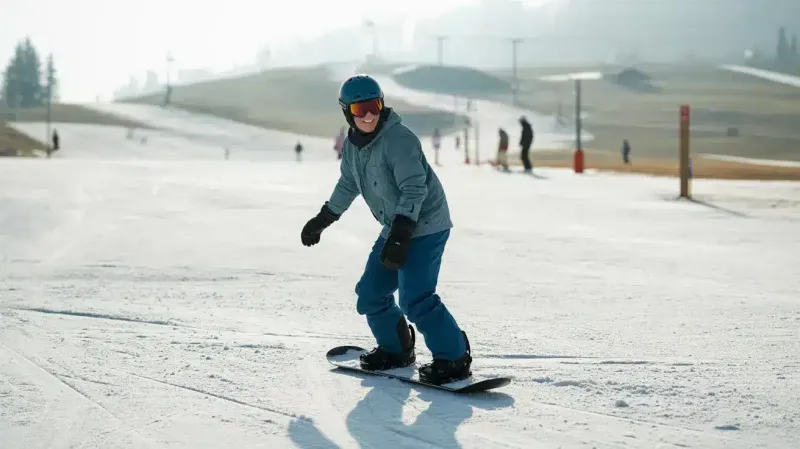
Photo by Photo by Zhane . on Unsplash on Unsplash
You've put in the off-season work. You've got solid boots, dialed bindings, and a board that fits your style. But somewhere around your third or fourth run on a demanding day, something starts to slip. Your legs feel heavier than they should. Your focus gets fuzzy on technical sections. You're making mistakes that feel dumb in hindsight. You chalk it up to fitness or altitude, shake it off, and keep going.
Here's the thing — it might not be your legs at all. It might be the way you're breathing.
Respiratory control is one of the most overlooked performance factors in snowboarding. Athletes in sports like cycling, swimming, and martial arts have been training breath for decades. Snowboarders? Most of us are still just kind of... winging it. That's a gap worth closing, because once you start riding with intention behind every inhale and exhale, the mountain starts to feel completely different.
Why Breathing Actually Matters More Than You Think
Let's get a little science-y for a second, but we'll keep it practical.
When you're riding hard — charging a steep line, absorbing a rough patch of chop, or landing a jump — your body demands oxygen fast. Your heart rate spikes, your muscles cry out for fuel, and your nervous system goes into a heightened state. If your breathing is shallow, erratic, or held (which happens more than most riders realize), you're essentially throttling your own engine.
Shallow breathing means less oxygen exchange per breath. Less oxygen means your muscles fatigue faster, your reaction time slows, and your decision-making — which you absolutely need on technical terrain — starts to degrade. On top of that, irregular breathing keeps your nervous system stuck in a low-grade stress state, which makes your body tense and your movements choppy rather than fluid and controlled.
Controlled breathing, on the other hand, does the opposite. It stabilizes your heart rate, keeps your muscles oxygenated, and — this is the big one — it tells your nervous system that you're in command of the situation. That matters enormously when you're staring down a steep pitch or threading a tight tree line.
The Breath-Hold Problem (And You're Probably Doing It)
One of the most common unintentional habits riders develop is breath-holding during moments of intensity. You drop into a steep section, and without realizing it, you lock up — including your lungs. This is a primal stress response, the same thing that happens when someone jumps out and scares you.
The problem is that even a few seconds of breath-holding mid-run can spike your heart rate, tighten your muscles, and throw off your timing. If you're doing this repeatedly across a full day of riding, you're accumulating fatigue and tension that compounds with every run.
Start paying attention. Next time you hit a section that makes you nervous or demands full concentration, notice whether you're breathing. Chances are you're not — or you're barely doing it. That awareness alone is the first step.
Breathing Patterns for Different Riding Conditions
Not all riding is the same, and your breathing strategy shouldn't be either. Here's how to match your breath to what the mountain is asking of you.
On long, sustained runs: Use a rhythmic breathing pattern — inhale for roughly two to three seconds, exhale for two to three seconds. Think of it like pacing yourself on a long trail run. You're not sprinting; you're managing your output over time. Keeping the exhale slightly longer than the inhale activates your parasympathetic nervous system, which helps regulate heart rate and keeps you from burning out before the base lodge.
On technical terrain: Slow down your breath even when your body wants to speed it up. When you're picking your way through moguls, navigating trees, or working through a tricky section of ice, your instinct might be to tighten up and hold your breath. Fight that. Take slow, deliberate breaths through your nose if conditions allow — nasal breathing filters and warms the air and helps moderate your arousal level, keeping you sharp without tipping into panic mode.
Before a big jump or drop: Use what's sometimes called a reset breath — a slow, deep inhale through the nose, a brief pause, and then a controlled exhale through the mouth. Do this once or twice before you commit to the feature. It signals to your body that you're ready, not scared. It's the difference between controlled aggression and just hoping for the best.
During recovery at the lift or between runs: This is your window to actually recover, not just catch your breath passively. Try box breathing: inhale for four counts, hold for four, exhale for four, hold for four. A few cycles of this on the chairlift will lower your heart rate, clear your head, and set you up to ride the next run better than the last.
Altitude Is Real — Here's How to Work With It
If you're riding at elevation — think anywhere from Colorado's Breckenridge and Vail to Utah's Alta or California's Mammoth — your respiratory system is already working harder than it would at sea level. The air is thinner, oxygen saturation is lower, and your body is doing extra work just to keep up.
For riders who live at lower elevations and drive up for the weekend, the adjustment period is real. You can't fully shortcut acclimatization, but you can support your body by being extra intentional about your breathing from the moment you arrive. Slow down your breathing rate consciously, especially during the first few runs. Avoid the temptation to go hard immediately. Give your respiratory system a chance to calibrate to the environment before you start pushing limits.
Staying well-hydrated also helps — dry mountain air dehydrates your respiratory tract, which makes breathing less efficient. Keep a water bottle accessible and sip consistently throughout the day.
Building the Habit Off the Mountain
The good news is you don't need to be on snow to train your breathing. Diaphragmatic breathing exercises, box breathing, and even yoga-style breathwork can all be practiced at home, at the gym, or literally anywhere. Even ten minutes a day of intentional breath practice builds the neural pathways that make controlled breathing automatic under pressure.
Some riders swear by incorporating breath training into their off-season cardio — focusing on nasal breathing during runs or bike rides to build respiratory efficiency. Others use mindfulness apps that include breathwork sessions. Find what fits your routine and commit to it. The payoff shows up fast.
Ride Harder, Longer, Smarter
Snowboarding demands a lot from your body and your mind simultaneously. It's a sport where physical capability and mental composure have to work together, especially when conditions get serious. Breathing is the bridge between those two things — it's the mechanism that keeps your body fueled and your head clear at the same time.
The riders who seem effortless on the mountain, the ones who make steep terrain look smooth and technical lines look easy — they're not just more fit than everyone else. They're more regulated. And a huge part of that regulation starts with the breath.
So next time you strap in, bring your lungs to the party. Ride hard, ride smart, ride free — and breathe like you mean it.