Call It Before You Crash: Building an End-of-Day Rule That Actually Works

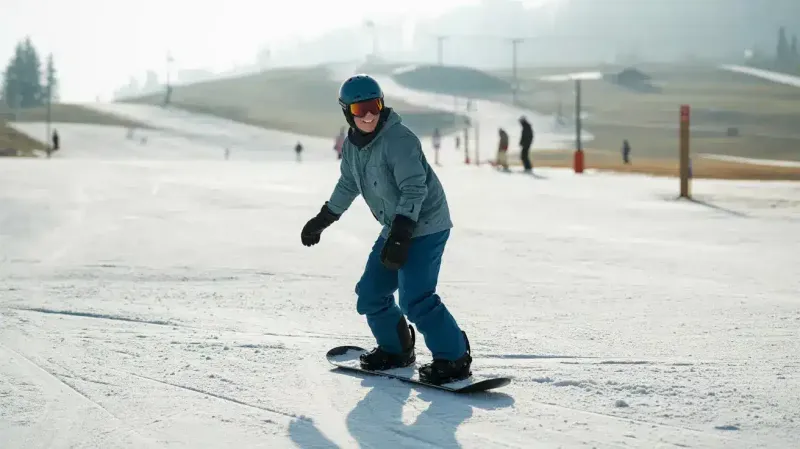
Photo: tired snowboarder at end of day sitting on snow near ski resort, via getsomerest.com
The last run of the day has a reputation problem. It is not the run itself. It is the rider. By the time the sun drops behind the ridge and the lifts start slowing down, most of us are not the same person who clicked in at 8:30 a.m. We are colder, hungrier, sloppier, and a little more willing to ignore the small voice that says, maybe not this one.
That is why the last run is so often where injuries happen. Not because the mountain suddenly gets more dangerous, but because the decision-maker is tired. The line that looked fine at noon looks fine at 3:45, even though your legs are cooked and your reaction time is running on fumes. This is not a lecture about being soft. It is a case for being honest.
Why ‘one more’ feels harmless
One more is a social sentence. It is what you say when the day was good and nobody wants to be the first person to call it. It is what you say when you paid for the ticket and want to squeeze out the last bit of value. It is what you say when the groomer looks smooth and the lift line is short and your buddy is already moving toward the chair.
That is the trap. One more feels harmless because it is small. It is not a whole extra day. It is not a new mountain. It is just one run. But fatigue does not care about the size of the decision. It cares about the state of the person making it. A tired brain is very good at making a bad idea feel reasonable.
What fatigue actually does to your decision-making
You do not need to be falling over to be impaired. Fatigue shows up in quieter ways. Your reaction time slows. Your balance gets less precise. Your proprioception, which is your body's sense of where it is in space, gets fuzzy. Your risk tolerance can shift in both directions: some riders get timid and stiff, while others get sloppy and overconfident.
Cold makes it worse. So does hunger, dehydration, and the weird fatigue that comes from a full day of stopping and starting. Add flat light or a crowded exit run, and you have a recipe for a bad call. The scary part is that you probably will not feel drunk or obviously compromised. You will feel normal. That is what makes the last run so sneaky.
The terrain gets worse when you are tired
Even if the trail is the same, your experience of it changes. The bumps feel sharper. The ice feels harder to find. The cat track feels narrower. The lift line feels more chaotic. The shaded sections get darker and the flat light gets flatter.
If you are riding a new line or chasing a feature you have not hit all day, that is a bad combination. Tired riders should not be exploring. They should be repeating what they know, at a speed that leaves room for error. There is a time for progression. The end of a long day is not it.
Set the rule before you need it
This is the whole point. Do not wait until you are tired to decide what tired you is allowed to do. Set the rule in the parking lot or on the first chair. Make it specific and make it easy to follow.
Pick a hard stop time. Not a vague plan to leave around three. A real time. Pick a last-chair number if you are riding a resort where that makes sense. Decide in advance that you will not start any new terrain after a certain hour. If you crash hard or tweak something, call it. Do not test the injury on one more run.
Use an energy budget, not just a clock. If your legs are shaking on the cat track or you are making sloppy turns on a groomer you have ridden all day, that is the signal. The clock is a backup. Your body is the primary source.
Agree on a buddy signal. A simple phrase like ‘I am done’ should end the negotiation. No guilt trip, no peer pressure, no ‘just one more’ from the person who still has legs. The group can split up. That is fine. Riding another day is better than proving a point on the last one.
The three-question stop check
If you are not sure whether to call it, run a quick check before you get on the chair. Can I name my next three turns? If you cannot picture a clean sequence, you are probably too tired to be making sharp decisions. Am I riding or reacting? If the whole run has been a series of last-second speed checks, that is a warning. Would I ride this line fresh? If the honest answer is no, then the answer is no.
You can also use the two-bad-turns rule. If you make two sloppy turns in a row on terrain you normally handle well, call it. Not because you are bad. Because your body is telling you something your ego is trying to talk you out of.
Make the walk to the car a win
Calling it early does not mean the day was wasted. It means you managed the day. Drink some water. Eat something. Stretch. Take your boots off like a person who plans to use them again tomorrow. Log the good runs, not just the last one.
The mountain will be there next weekend. Your knees, wrists, and shoulders are harder to replace. At Powe Snowboards, we like the phrase ride hard, but we are just as serious about ride smart. The best last run is the one you skip because you want to be back for the first chair next time.