The Carve Code: Unlocking the Edge Control Secrets That Actually Make You Faster and Smoother

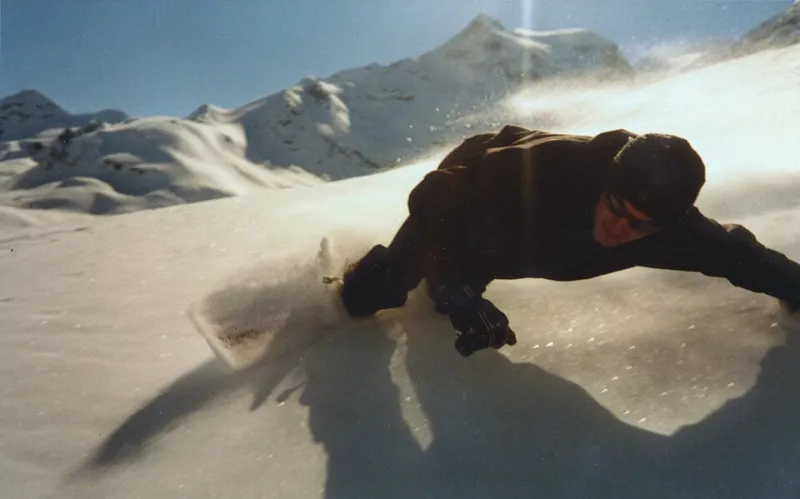
Photo by Photo by Ed Wingate on Unsplash on Unsplash
Let's be honest about something: most riders who think they're carving are actually just skidding with confidence. It looks similar from the lift, it feels kind of similar when you're doing it, and nobody's going to call you out mid-run. But the moment you ride behind someone who actually has dialed edge control — clean trenches in the snow, zero chatter, effortless transitions — you know exactly what's been missing.
Edge control is the skill that separates riders who plateau at "pretty good" from the ones who seem to glide down the mountain like the laws of friction don't apply to them. And the frustrating part? Most of the mistakes riders make aren't about effort. They're about misunderstanding what edge control actually is.
What Edge Control Really Means (It's Not What You Think)
Ask ten intermediate riders what edge control means and most of them will say something like "digging your edge in" or "leaning into the turn." Not wrong, exactly, but dangerously incomplete.
Real edge control is a combination of three distinct variables working together:
Edge angle — how steeply your board's edge is engaged with the snow surface.
Pressure distribution — where along the length of your board you're loading weight, and how that shifts through the arc of a turn.
Transition timing — how cleanly and deliberately you move from one edge to the other between turns.
Most riders obsess over edge angle and completely neglect the other two. They crank hard onto an edge and wonder why their board chatters, why they blow out on steeper pitches, or why their turns feel choppy and effortful. The edge angle might be fine. The pressure distribution is usually the culprit.
The Pressure Problem
Here's something that clicks for a lot of riders when they finally hear it: your board is designed to bend. That bend — called camber flex — is what allows the edge to make clean contact with the snow across the full length of the board during a turn. When you load pressure correctly, you're essentially using your body weight to activate that flex and let the board do the geometry for you.
When you load pressure incorrectly — usually too far back, or too static — the board can't flex the way it's meant to. The tail drags, the nose floats, and instead of a clean arc, you get a skid with an edge engaged. It feels like carving. It isn't.
The fix starts with understanding where you're putting pressure and when. Early in a turn, pressure should shift toward your front foot, helping the nose engage and initiate the arc. As you move through the middle of the turn, pressure centers out. As you exit, it naturally transfers toward the tail, helping you complete the arc and set up the transition. It's a flowing, continuous movement — not a static stance you hold.
Common Mistakes That Are Wrecking Your Carves
Sitting into the turn. This is the big one. Riders drop their hips toward the snow thinking that's what "getting low" means. What actually happens is your hips fall behind your base of support, you load the tail, and you lose the nose. Get low by bending your knees, not by collapsing at the waist.
Death-gripping the edge through the whole turn. Holding maximum edge angle from entry to exit sounds committed, but it's actually fighting the board. The edge angle should vary naturally as you move through the arc — slightly less aggressive at initiation, peaking mid-turn, releasing as you transition.
Rushing the flat spot. The transition between edges — that brief moment when the board is flat on the snow — is where most carves fall apart. Riders rush through it, never fully releasing one edge before loading the next. The result is a skidded transition that breaks the clean line you built in the previous turn. Slow down that moment. Let the board come flat. Then engage.
Upper body rotation. If your shoulders are driving your turns, your lower body is just trying to keep up. Carving is a lower-body-led movement. Keep your upper body quiet and facing down the fall line while your hips and legs do the work.
Progressive Drills to Rebuild From the Ground Up
You don't need a coaching camp or a perfect powder day to fix your edge control. These drills work on any groomed run and they build on each other.
Drill 1: The Straight-Line Edge Check Find a mellow groomed pitch and point your board straight downhill. From there, make a single, deliberate edge engagement — just toe-side or just heel-side — and hold it until you stop. Don't turn. Just feel how the edge grips, how pressure travels through the board, and how the snow responds. This isolates edge engagement from everything else happening in a real turn.
Drill 2: Garlands Garlands are partial turns that return to the fall line instead of completing the arc. Start from the fall line, initiate a toe-side carve, let it run for a few seconds, then release back to neutral. Repeat across the run. This trains edge initiation and release without the complexity of full turn transitions. Focus on smooth entry and clean release — not how deep you can dig.
Drill 3: The Pause Transition During regular turns, deliberately pause for a full second in the flat spot between edges. It'll feel awkward. That's the point. This forces you to consciously feel the release of one edge before loading the next, which is the habit you're trying to build. As it gets more comfortable, shorten the pause until the transition flows naturally.
Drill 4: Pencil Turns Set a mental goal of making the narrowest possible tracks in the snow. Pencil-thin lines mean your board is truly carving — not skidding. Wide, smeared lines mean you're sliding. This gives you immediate visual feedback on every turn. If you can look back up the hill and see two clean, parallel lines with minimal snow spray, you're doing it right.
The Patience Tax
Here's the part nobody wants to hear: rebuilding edge control after years of reinforcing bad habits takes time. Your body has muscle memory baked in, and overriding it requires deliberate, repetitive practice on terrain that's well within your comfort zone. That means going back to blues — or even greens — and working these drills with full attention instead of just sending it on black runs and hoping something clicks.
The riders you admire for their smooth, effortless carving didn't get there by riding harder. They got there by riding smarter. They slowed down, got specific, and put in reps on the fundamentals until those fundamentals became automatic.
That's the whole deal with edge control. It's not flashy. It's not going to get you Instagram clips of you stomping a triple cork. But it is the foundation that every other skill you want to develop — speed, steeps, variable snow, park riding — is built on top of.
Get the edge right, and everything else gets easier. That's not philosophy. That's physics.