Cold Hands, Slow Rider: What Your Gloves Are Actually Doing to Your Performance
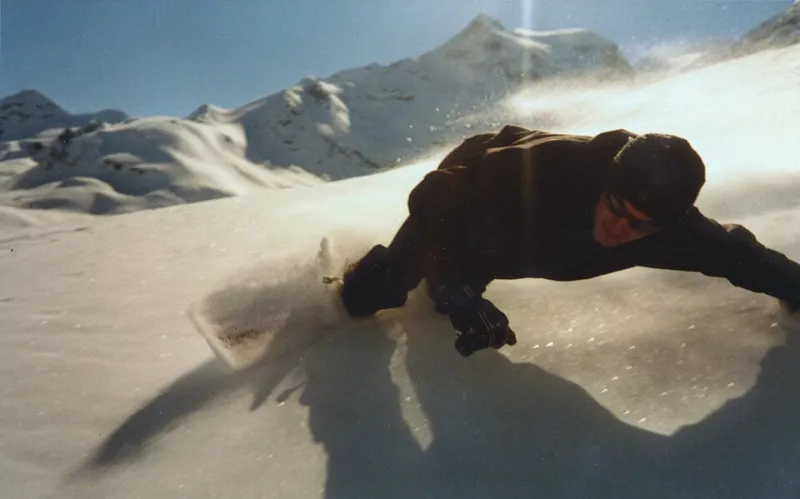
Photo: Pittigrilli~commonswiki derivative work: Mussklprozz, CC BY-SA 4.0, via Wikimedia Commons
You just dropped $600 on a new board. You dialed in your bindings. Your boots fit like they were made for your feet. And then you grab a pair of gloves off the sale rack because, hey, how much do gloves really matter?
A lot. It turns out, a whole lot.
Hand protection is one of those pieces of gear that riders consistently treat as an afterthought—right up until they're halfway down a groomer at Breckenridge with numb fingers, zero feel for the snow, and a reaction time that's somewhere between "slow" and "dangerous." The connection between your hands and your riding performance is real, it's measurable, and it's almost entirely ignored by the average snowboarder.
Let's fix that.
The Grip Problem Nobody Talks About
Here's something worth sitting with: your hands are your primary feedback system on the mountain. Sure, your feet are doing the work, but your arms and hands are constantly making micro-adjustments—bracing for impact, dragging for balance, reaching during a carve, planting during a jump. When your gloves are too bulky, too slippery, or just plain wrong for the conditions, every one of those adjustments gets delayed or muted.
Think about the last time you had to fidget with a binding buckle mid-run, or tried to zip a pocket with gloves that felt like oven mitts. That friction—the mental and physical friction of fighting your own gear—adds up. It pulls your focus off the mountain and onto your hands. And on a technical run or in variable conditions, divided attention is exactly what you can't afford.
Bulky gloves also affect pole-less balance instincts. Even without poles, riders use subtle arm positioning constantly. When your hands feel disconnected from what they're touching or gripping, your proprioception—your body's internal sense of position—takes a hit.
Insulation vs. Dexterity: The Trade-Off You Need to Actually Make
This is where most riders get it wrong. They assume more insulation equals better gloves. So they buy the warmest thing on the rack, stuff their hands in, and wonder why everything feels clunky.
The truth is that insulation and dexterity exist on a sliding scale, and where you land on that scale should depend entirely on how and where you ride.
Park and freestyle riders need dexterity above almost everything else. Grabbing your board requires actual grip strength and finger articulation. A glove with 200 grams of Thinsulate might keep your hands toasty on a chairlift, but it's going to make clean grabs feel awkward and inconsistent. Freestyle-focused riders are often better served by a lighter glove with strategic insulation placement—warmth where you need it, mobility where you don't.
Backcountry and all-mountain riders face a different problem. You need warmth for long exposure, but you also need to be able to operate zippers, adjust gear, and handle equipment with some level of precision. Layering systems—a thin liner glove under a waterproof shell—give you the flexibility to adapt. Cold at the top? Full setup. Warmer on the descent? Ditch the shell.
Groomers and resort riders sit somewhere in the middle. Conditions are generally more controlled, but you're still outside for hours. A mid-weight glove with good waterproofing and a snug fit usually hits the sweet spot.
The key takeaway: don't buy for the coldest day you might ever have. Buy for the conditions you actually ride in most of the time.
Lining Materials Matter More Than You Think
The outer shell of a glove gets all the attention—waterproof ratings, durability, reinforced palms. But the lining is what actually determines how your hands feel during a full day on the mountain.
Fleece linings are warm and soft, but they tend to absorb moisture over time. If your hands sweat—and they will—a fleece lining can turn clammy by early afternoon, which tanks both comfort and warmth retention.
Synthetic moisture-wicking linings do a better job of pulling sweat away from your skin, keeping your hands drier over longer sessions. Some higher-end gloves use merino wool blends, which regulate temperature surprisingly well and resist odor better than synthetics. For riders who push hard and run warm, that moisture management is worth paying attention to.
Fit against the lining also matters. A glove that's slightly too large will bunch at the fingers, reducing tactile sensitivity. Too small and you restrict circulation, which accelerates cold. The fit should be snug without being tight—your fingers should be able to flex without the glove pulling across the knuckles.
Wrist Support: The Underrated Feature
Fall on your hands enough times—and you will—and wrist support stops being optional. Most gloves offer some level of wrist coverage, but the quality varies dramatically.
Look for gloves with a longer gauntlet-style cuff that layers over your jacket sleeve. This keeps snow out and adds a layer of structural support around the wrist joint. Some gloves designed specifically for snowboarding include built-in wrist guards or impact padding, which can significantly reduce injury risk on hard falls.
If you're newer to riding or working on tricks that put you at higher fall risk, a glove with integrated wrist protection is worth serious consideration. It's not just about safety—knowing your wrists are protected actually changes how you approach risk on the mountain. Confidence and protection are connected.
Price Tags Don't Equal Performance
Let's debunk something real quick: expensive gloves do not automatically perform better. There are $180 gloves with mediocre lining materials and poor fit systems, and there are $60 gloves that nail every functional requirement for a specific riding style.
What you're actually paying for in premium gloves is usually a combination of brand reputation, materials quality, and durability. A $150 glove from a reputable outdoor gear company might last five seasons. A $40 pair might need replacing after one. So cost-per-use math can favor the expensive option—but only if the glove actually fits your needs.
Before you buy, ask yourself: Does this glove fit my hand shape without bunching? Can I flex my fingers freely? Is the waterproofing appropriate for my local conditions? Does the insulation weight match my riding style? If you can answer yes to all of those, you've found your glove—regardless of the price tag.
A Quick Guide to Matching Gloves to Your Riding
- Park/Freestyle: Low-to-mid insulation, flexible fit, reinforced palm, wrist protection optional but smart
- All-Mountain: Mid-weight insulation, moisture-wicking liner, waterproof shell, gauntlet cuff
- Backcountry/Touring: Layering system (liner + shell), high breathability, touchscreen-compatible fingertips for device use
- Cold-weather/Powder days: Heavier insulation, full waterproofing, sealed seams, wrist gauntlet
Your Hands Deserve Better
Riding hard means trusting every piece of your kit. Your board, your boots, your bindings—they all get scrutinized. Your gloves should get the same treatment. Because the moment your hands get cold, numb, or restricted, everything downstream suffers: your reaction time, your confidence, your willingness to push into new terrain.
Don't gamble on your hand protection. Find the right fit, the right weight, and the right construction for how you actually ride. Your hands are talking to the mountain every single run. Make sure they're saying something useful.