Stop Blaming Your Board: Your Boots Are the Real Performance Killer
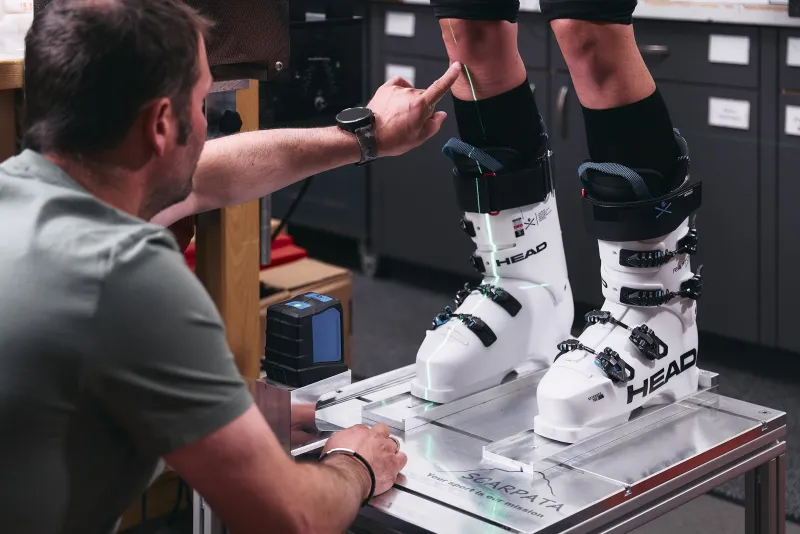
Photo: snowboarder fitting boots in ski shop closeup, via www.intersport-arlberg.com
You spent three weeks researching your new deck. You watched every binding review on YouTube, read forums until 2 a.m., and finally pulled the trigger on a setup that should, by all accounts, rip. But something still feels off. Your heel lifts on heel-side carves. Your turns feel sloppy. Your feet are wrecked by noon.
We hate to break it to you, but it's probably not your board.
Boots are the most underrated piece of gear in snowboarding — and the most commonly botched purchase. At Powe Snowboards, we've seen it time and again: riders drop serious cash on premium setups, then stuff their feet into boots that fit like cardboard boxes. The result? Stunted progression, unnecessary fatigue, and a riding style that looks hesitant because it is hesitant.
Let's change that.
Why Boot Fit Actually Matters More Than You Think
Here's the thing most shops won't tell you: your boots are your interface with the entire mountain. Every micro-adjustment you make with your ankles, every subtle weight shift, every pre-turn you initiate — it all has to travel through your boots before it reaches your bindings and then your board. A poorly fitted boot creates what coaches call "dead space," a delay between your intention and the board's response.
In practical terms? That means you're always a half-beat behind. Your heelside edge engages late. Your toeside carves feel vague. You compensate by riding more aggressively than necessary, which burns energy faster and makes everything look forced.
Proper fit tightens that feedback loop. When your boot wraps your foot snugly — not painfully, but purposefully — your movements translate immediately. Riders who've made the switch consistently describe it the same way: the board suddenly feels like an extension of their body rather than something they're fighting.
The Most Common Fitting Mistakes US Riders Make
Walk into any resort in Colorado, Utah, or Vermont and you'll spot these mistakes everywhere:
Sizing up for comfort. This is the big one. American riders, especially beginners, tend to buy boots a half-size or full size too large because they feel comfortable in the shop. Snowboard boots compress significantly after a few sessions of heat molding and flex. What feels roomy on day one becomes sloppy by day five.
Ignoring heel hold. Lift your heel inside the boot. If it moves more than about a quarter inch, you're looking at heel lift on every heelside turn. That's energy loss and imprecision baked right into your setup.
Mismatching flex to riding style. A soft, forgiving boot is great for park laps and learning. It's a liability on groomed steeps or aggressive carving. Riders who push into harder terrain with noodle-flex boots end up fighting the equipment constantly.
Skipping the heat mold. Most modern boots use a heat-moldable liner. Skipping this step — or doing it wrong — means you're never getting the custom fit the boot was designed to provide. It takes 20 minutes. Do it.
Wearing the wrong socks. Thick ski socks inside snowboard boots actually reduce sensitivity and can create pressure points. A thin-to-medium merino wool snowboard-specific sock is almost always the better call.
The Science Behind Comfort Meets Performance
There's a reason professional riders spend serious time dialing their boot fit — and it's not vanity. The foot has 26 bones, 33 joints, and over 100 muscles and tendons. When you're on a snowboard, you're asking all of them to work together in coordinated ways that your body didn't evolve to do naturally.
A well-fitted boot essentially creates a stable platform that allows the right structures to activate and the wrong ones to stay quiet. Your Achilles tendon, for example, does a lot of work in snowboarding. When your heel is properly locked down, the tendon can engage efficiently. When it's floating around, your lower leg muscles compensate, leading to the burning calf fatigue that so many intermediate riders chalk up to "just being out of shape."
The flex rating matters here too. Flex is measured on a rough scale of 1–10 (soft to stiff). Beginners and park riders generally want something in the 3–6 range. All-mountain and carving riders tend to prefer 6–8. Aggressive freeride and backcountry riders often go 8–10. Your local terrain should drive this decision as much as your skill level.
Your Step-by-Step Fitting Guide
Whether you're heading to a shop or dialing things in at home, here's how to actually fit your boots properly:
Step 1: Measure your foot correctly. Use a Brannock device if possible. Measure both feet — they're rarely identical — and fit to the larger one. Measure at the end of the day when your feet are slightly swollen, which better mimics how they'll feel after a few runs.
Step 2: Put the boot on with your riding sock. Lace it up to your normal riding tightness. Stand in a natural snowboard stance — knees slightly bent, hips back. Your toes should lightly graze the front of the boot. When you flex forward into a riding position, they should pull back slightly.
Step 3: Check heel hold. With the boot properly laced, try to lift your heel. It should feel locked. Any significant movement is a red flag.
Step 4: Walk around for 10 minutes. Pressure points reveal themselves quickly. A little snugness is fine; sharp pain or numbness is not.
Step 5: Heat mold the liner. Follow the manufacturer's instructions. Most involve warming the boot in a specialized oven (shops have these) or using a hair dryer at home in a pinch. Wear your riding socks, buckle everything up, and stand in your riding stance while the liner cools.
Step 6: Reassess after your first two sessions. Liners pack out. You may need to re-lace tighter or revisit the heat mold process once the boot has broken in.
Getting Professionally Fitted
If budget allows, a professional boot fitting from a specialty snowboard or ski shop is worth every penny. Look for shops with staff who actually ride — in resort towns like Breckenridge, Jackson Hole, or Killington, these people are easy to find. A good boot fitter will watch you walk, assess your foot shape and arch type, and make recommendations based on your actual anatomy rather than just your shoe size.
Some shops offer custom footbeds, which are orthotic insoles molded specifically to your foot. These aren't cheap — expect to pay $75–$150 on top of the boot cost — but for riders with flat feet, high arches, or persistent foot pain, they can be genuinely transformative.
The Payoff Is Real
Get the fit right, and the changes are immediate. Your turns sharpen. Your heel-side edge feels planted. You stop white-knuckling every run and start actually riding with intention. The mountain doesn't get easier — you just get better at reading and responding to it.
That's what riding smart looks like. And it starts from the ground up.