Mind Over Mountain: Breaking the Mental Chains That Keep Riders Stuck
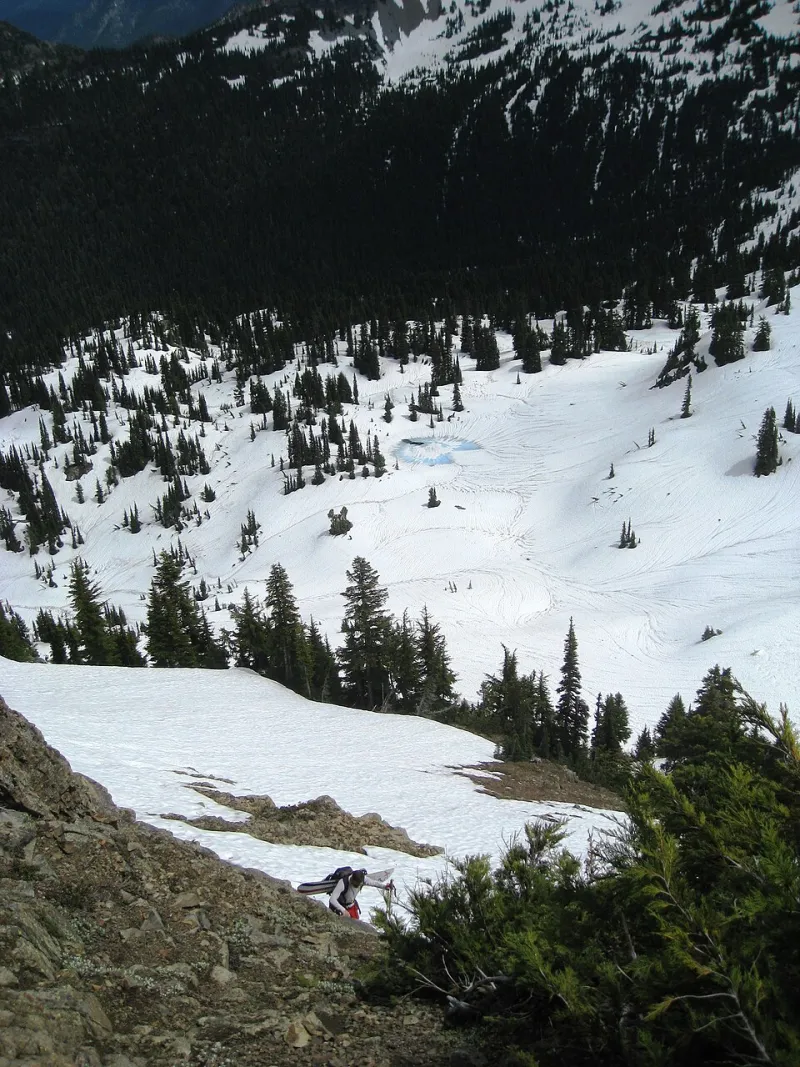
Photo: brewbooks from near Seattle, USA, CC BY-SA 2.0, via Wikimedia Commons
You know the feeling. You've been riding for a few seasons, you can carve a blue run with confidence, maybe you've even started dabbling on blacks. And then — nothing. The progression that felt so natural in year one and two just... stops. You're not getting worse, but you're definitely not getting better. Welcome to the plateau, and trust us, you're not alone.
Here's the thing nobody tells you at the rental counter: the biggest obstacle between where you are and where you want to be isn't your gear, your fitness, or even your technique. It's what's happening between your ears.
The Comfort Zone Is a Trap Dressed Up as Progress
Intermediate riders are, statistically, the largest group on any mountain on any given weekend. And a huge chunk of them have been "intermediate" for three, four, even five seasons running. Sports psychologists who work with action sports athletes have a name for this: the competence trap. You get good enough to have fun, and your brain — wired for survival and efficiency — decides that's plenty.
Dr. Amanda Reyes, a Denver-based sports psychologist who works with competitive snowboarders and weekend warriors alike, puts it plainly: "The brain is incredibly efficient at protecting what it perceives as a stable state. Once a rider reaches a level where they feel reasonably safe and competent, the psychological drive to push further gets overridden by a very primal desire to stay comfortable."
The result? You lap the same groomer runs. You skip the terrain park because it feels "not really your thing." You watch other riders drop into steeper lines and tell yourself you'll try it next season. Next season becomes the season after that.
Fear Is Data, Not a Stop Sign
Let's talk about fear, because it's the elephant in the lift line. Fear gets a bad rap in action sports culture — we celebrate the riders who seem fearless, the ones who throw themselves off cornices without flinching. But coaches who work with developing athletes will tell you that fear isn't the enemy. Mismanaged fear is.
Tim Hargrove, a PSIA-certified snowboard coach who's worked with riders from beginner to advanced levels at resorts across Colorado and Utah, describes fear as a feedback mechanism. "When a rider feels fear on a slope, that's useful information. It means their brain has identified a gap between their current skill set and what the terrain is demanding. The goal isn't to eliminate that feeling — it's to close the gap."
The problem is that most riders respond to fear by retreating rather than analyzing. Instead of asking what specifically feels out of control here, they just decide the run isn't for them. Over time, that retreat becomes a habit, and the habit becomes a ceiling.
A practical reframe: next time you feel that spike of anxiety at the top of a new run, pause and get specific. Is it the steepness? The icy patches on the left side? The narrow choke point near the trees? Naming the exact source of discomfort shifts your brain from threat response into problem-solving mode — and problem-solving is how skills actually develop.
Goal-Setting That Actually Works on the Mountain
Here's where a lot of well-meaning advice falls apart: vague goals produce vague results. "Get better at powder" or "stop being scared of steeps" aren't goals — they're wishes. If you want your progression to move with purpose, you need to borrow a page from performance coaching and get surgical about what you're chasing.
Coaches in the action sports space increasingly use a framework built around process goals rather than outcome goals. An outcome goal sounds like: "I want to ride a double black by the end of the season." A process goal sounds like: "This run, I'm going to focus on keeping my weight centered over my front foot on the fall line."
Process goals are powerful because they give your brain something concrete to work on in real time. They also take the pressure off perfection. You can "succeed" at a process goal even on a run where everything else goes sideways, because success is defined by your focus and intention, not the result.
Try building a simple three-tier goal structure before your next trip:
- Session goal: One specific technical focus for the day (edge pressure, hip alignment, etc.)
- Trip goal: One new terrain type or feature you'll attempt at least once
- Season goal: A meaningful benchmark that excites and slightly terrifies you
Write them down. Seriously. Research consistently shows that written goals carry significantly more psychological weight than mental notes.
The Confidence Feedback Loop
Confidence in snowboarding isn't a personality trait — it's a skill that gets built through accumulated small wins. This is why coaches often recommend what's called the "80/20 progression" approach: spend roughly 80 percent of your riding time on terrain where you feel genuinely capable, and push into uncomfortable territory for the remaining 20 percent.
That ratio might sound conservative, but it's deliberate. The comfortable 80 percent isn't wasted time — it's where your brain is cementing muscle memory, building automaticity in your movement patterns, and banking the confidence reserves you'll draw on when you step into that challenging 20 percent.
Riding hard on terrain that's just slightly beyond your comfort zone, regularly, consistently, across a full season? That's how plateaus become stepping stones.
Ride Smart, Ride Free
Breaking through a plateau isn't about finding some secret technique or buying new gear (though we'd never say no to new gear). It's about getting honest with yourself about where fear and comfort are quietly running your riding life — and then building a mental framework that puts you back in the driver's seat.
The mountain isn't waiting for you to be ready. But your mindset? That part is entirely up to you.