Wax On, Wax Wrong: The Truth About What's Actually Under Your Board
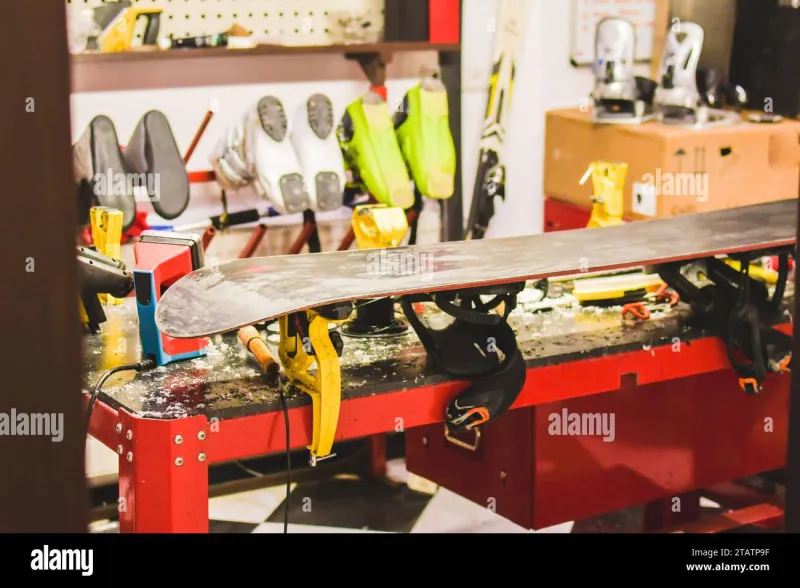
Photo: snowboarder waxing snowboard in ski shop workshop, via c8.alamy.com
Walk into any ski shop in the country and you'll find a wall of wax options — colorful little bars priced anywhere from $8 to $80, each one promising glide, speed, and some vague claim about "nano-particles" or "racing-grade fluorocarbons." Most riders grab the cheap universal block, maybe ask the shop kid what temperature it works at, and roll out the door feeling like they've handled it.
Here's the thing: that approach might be fine. Or it might be quietly robbing you of performance every single run. The frustrating part is that most riders never know the difference because they've never actually tested anything. Let's fix that.
Why Wax Actually Matters (And Why It Sometimes Doesn't)
Snow is not just frozen water. It's a dynamic, constantly changing surface made up of ice crystals that vary in size, shape, and moisture content depending on temperature, humidity, altitude, and age. When your base slides across that surface, you need a thin layer of meltwater between the two — enough to reduce friction, but not so much that suction drag takes over.
Wax does two jobs: it creates a hydrophobic barrier that controls how much water sticks to your base, and it fills microscopic pores in the base material to keep it from drying out and oxidizing. Get both of those things right and your board moves efficiently. Get them wrong and you're fighting the snow with every turn.
That said, wax matters most when conditions are demanding. On a groomed blue run at 28°F with fresh corduroy underfoot, an $8 bar and a $50 bar will feel nearly identical to 95% of riders. The gap opens up in wet spring slush, in dry cold powder, in refrozen hardpack, and in any situation where you're actually asking your board to perform at its limit. If you're a park rider hitting laps on the same feature all day, wax selection is almost irrelevant. If you're dropping into a long backcountry line where momentum is everything, it becomes a real variable.
Breaking Down the Temperature Spectrum
The single most important variable in wax selection is temperature — specifically the snow surface temperature, not the air temp. That distinction matters more than most people realize.
Cold wax (below 15°F / -9°C): At these temps, snow crystals are sharp and dry. You need a harder wax with a higher melting point. Soft wax applied in cold conditions gets scraped off faster and clogs the crystal structure, which actually increases drag. Look for waxes labeled "cold" or "blue" — they're formulated to be harder and more durable.
All-temperature or universal wax (15°F to 32°F / -9°C to 0°C): This is where that $8 shop bar lives, and honestly, for this range, it earns its keep. Universal wax is designed to perform adequately across the most common riding temperatures in most US mountain regions. If you're at Park City, Breckenridge, or Killington on a typical mid-season day, you're likely in this window.
Warm wax (above 32°F / 0°C): Spring riding is a whole different animal. Wet, heavy snow creates a suction effect on your base that hard cold wax can't address. You need a softer, more hydrophobic wax that actively repels water rather than just resisting it. Skipping this swap in April is one of the most common reasons riders feel "slow" during spring sessions.
Base Construction Changes the Equation
Here's the part that wax marketing almost never tells you: how well your board holds wax depends heavily on what your base is made of and how porous it is.
Extruded bases — common on beginner and mid-range boards — are denser and less porous. They don't absorb wax as deeply, which means they're easier to wax but also don't hold it as long. Sintered bases, found on most performance boards, are more porous and absorb wax more thoroughly. They deliver better glide but require more prep time and more frequent re-waxing to stay at their best.
If you're riding an extruded base, the premium $60 race wax is almost certainly overkill — your base literally can't take advantage of it. If you're on a high-end sintered board, skimping on wax prep means you're leaving performance on the table that you already paid for when you bought the board.
The Real Deal on Fluorinated Wax
For years, high-fluorocarbon waxes were the gold standard for competitive riders. They were also expensive — sometimes $100+ for a small bar — and as of 2023, fluorinated waxes have been banned from FIS competition due to environmental concerns. Several major brands have pulled fluoro products entirely.
For recreational riders, this is largely a non-issue. Hydrocarbon waxes have improved significantly, and the performance gap in non-competitive conditions is minimal. If a shop is still pushing high-fluoro wax as a premium upgrade for your weekend riding, that's a red flag. The science doesn't back it up for casual use, and the environmental cost is real.
How to Actually Test Your Wax Performance
Most riders never test wax systematically, which means they never know if it's working. Here's a simple field framework:
- Pick a consistent test run. Same trail, same conditions, same time of day. Groomers work best because variables are controlled.
- Run a tuck. Find a flat section after a moderate pitch and ride it in a full tuck with no pumping. Note where you stop or how far you travel.
- Change one variable at a time. Try a cold wax versus universal versus warm wax across different days with similar temps and note the difference in that flat runout.
- Check your base after a full day. A properly waxed base should look slightly shiny and feel smooth. A dry base looks matte and chalky — that's oxidation, and it means your wax wore through.
It's not scientific, but it builds real-world intuition faster than any product description will.
The Bottom Line
The $8 bar isn't always costing you speed — but using it without thinking definitely is. Match your wax to your snow temperature, understand your base construction, and stop paying a premium for marketing language that doesn't translate to real-world gains. Ride the conditions you're actually in, not the ones on the label.