Footage You Can Use: A No-Nonsense Phone Review Routine for Snowboarders
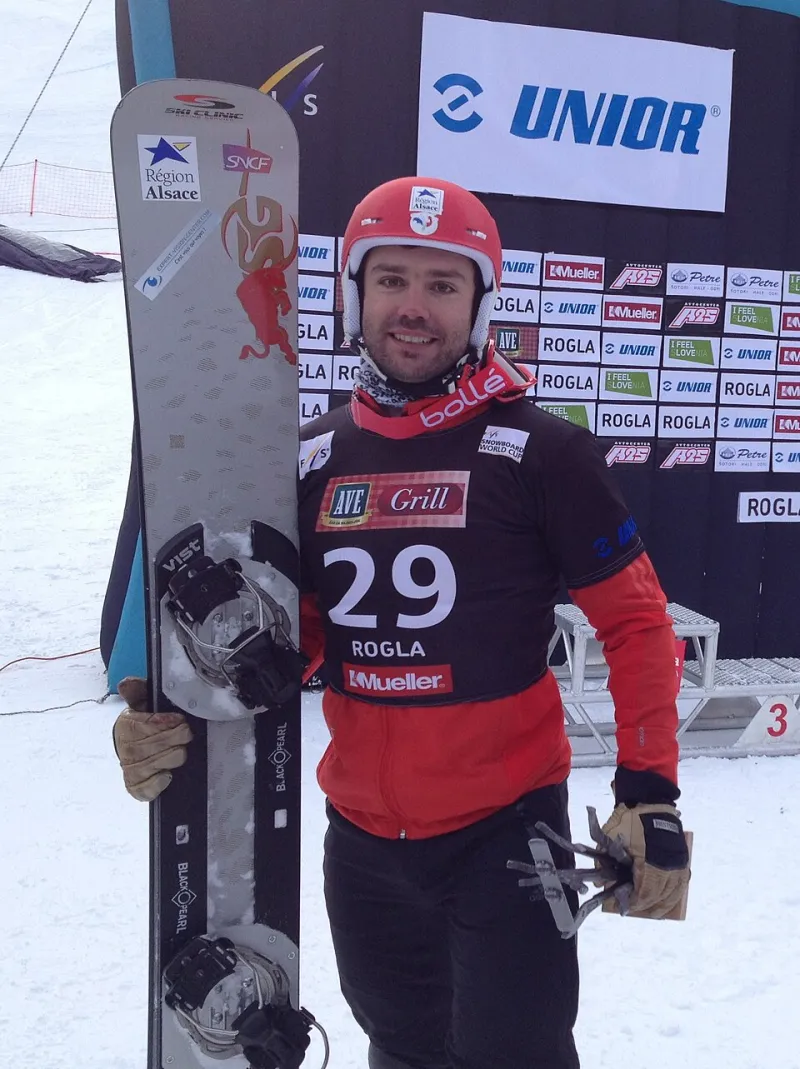
Photo: Christophe Guinamard, Licence Ouverte, via Wikimedia Commons
Most riders film to prove they were there. That is fine. A clip of a clean pow turn or a park lap is a good memory. But the same phone in your pocket can also be a coaching tool if you shoot with a purpose and review it without turning the whole thing into homework.
The trick is to stop treating footage as a highlight reel and start treating it as feedback. You do not need a film degree, a gimbal, or a friend who knows what a gimbal is. You need a few seconds of usable video, a slow-motion button, and one honest question.
Shoot clips that answer a question
Random footage gives you random information. Before you hit record, decide what you want to see. Are you working on heel-side edge control? Park landings? Mogul absorption? Cat-track speed management? Pick one thing and film that thing.
Short clips beat long epics. Ten to fifteen seconds is plenty for a turn, a feature, or a landing. If you film a three-minute run, you will probably watch it once, get distracted by how cool the background looks, and learn nothing. If you film a tight clip, you can actually study it.
Use four angles that actually tell you something
You do not need a production crew. You need a few repeatable angles.
A side view is the best angle for posture, edge angle, and body position. Set up downhill and slightly to the side of the rider's path. Keep the phone steady and let the rider pass through the frame.
A behind view shows line choice and speed control. It is also good for seeing whether someone is steering with their upper body or getting twisted through the turn.
A front view exposes what the upper body is doing. Are the shoulders opening early? Are the hands swinging? Is the rider looking where they want to go, or staring at the snow in front of the board?
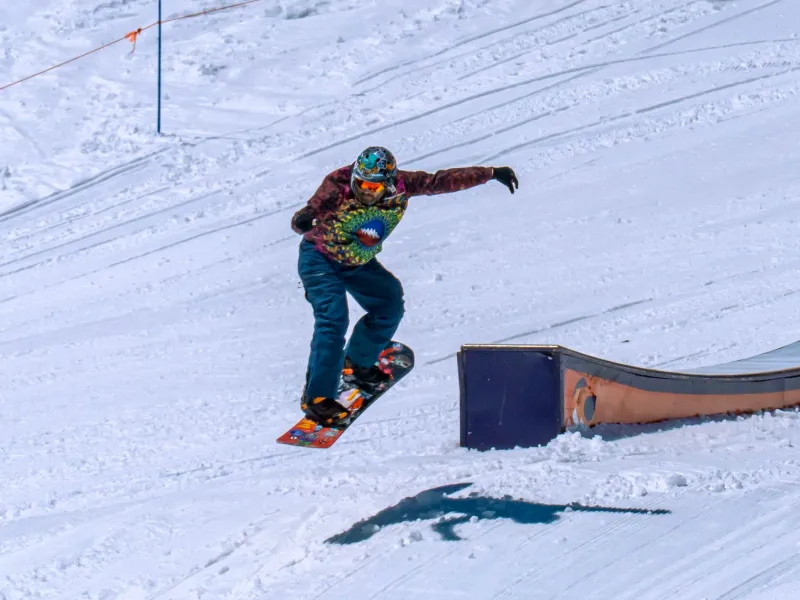
A low angle is great for park features and edge contact. It makes the board and the takeoff or landing easier to read. Just do not put the phone somewhere it will get run over.
Stabilize the shot. Lean the phone against a glove, a backpack, or a small tripod. Keep the rider filling a good portion of the frame. Avoid zooming if you can. Digital zoom turns a useful clip into a blurry guessing game.
Slow it down, but not forever
Slow motion is the cheat code. Most phones can shoot slow-mo or play back at reduced speed. Use it on the moment you are trying to fix, not the whole clip. Watch the entry, the apex, and the exit of the turn. Watch the takeoff, the absorb, and the ride-away.
If you slow down every frame of a long clip, you will get lost. Pick one phase and study it. For a turn, that might be the moment the edge engages. For a landing, it might be the moment the board touches down. For a park feature, it might be the approach and the pop.
The five-question review checklist
You do not need jargon to review your riding. Ask simple questions.
First, is my weight centered over the board at turn entry? If you are leaning back, you will see it in the side view. If you are diving forward, you will see that too.
Second, am I twisting my upper body or steering with my lower body? Watch the shoulders and hips. If the upper body opens first, the board may follow late.
Third, when does my edge engage? Early, late, or somewhere in the middle? A lot of sloppy turns start with a late edge change and end with a skid.
Fourth, is my line smooth or am I straight-lining into speed checks? From behind, you can see whether you are making deliberate turns or surviving the run in chunks.
Fifth, where do I lose balance? Heel side, toe side, front foot, back foot, takeoff, landing? Naming the moment is more useful than saying the whole run felt weird.
Pick one fix per session
This is where most riders go wrong. They watch a clip, spot five problems, try to fix all of them, and end up riding worse. Do not do that. Pick one fix. Just one.
If you are backseat on heel-side turns, make your focus a simple drill: hands over the board, finish the turn, feel the pressure move. If you are rushing your park approach, make your focus a slower entry and a clear pop. If you are skidding into the lift line, make your focus an earlier speed check.
Then film the same angle again. Before and after is the whole game. You do not need a perfect clip. You need a comparison.
Do not let the camera become the ride
Filming can easily turn into standing around. You take a clip, watch it, take another clip, adjust the phone, scroll through the footage, and suddenly you have spent twenty minutes in the cold without riding. That is not self-coaching. That is a photo shoot.
Film a few laps, then put the phone away. Review at lunch or after the session. The mountain is the classroom. The phone is just the notebook.
Build a simple review routine
After the session, give yourself five minutes. Delete the junk clips. Pick one clip that shows the thing you were working on. Watch it once at normal speed, once in slow motion, and once more with the five questions in mind. Then write one sentence in your phone: what worked, what did not, and what you will try next time.
That is it. No editing app, no slow-motion montage, no dramatic music. Just feedback you can actually use. At Powe Snowboards, we are not against a good clip. We are just more interested in the next turn than the last post.