Lights On, Crowds Gone: Why Night Sessions Might Be the Smartest Riding You'll Do All Season
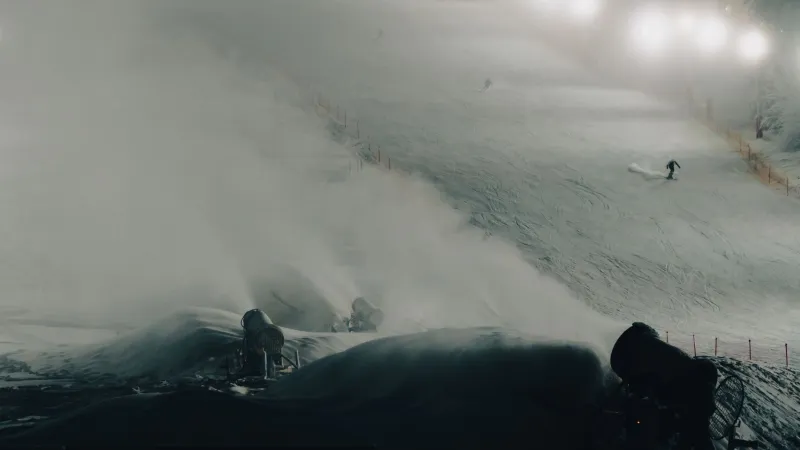
There's a moment that happens around 4 PM at most resorts. The parking lot starts emptying, the day-trippers file toward their cars, and the mountain suddenly exhales. If you're still on the lift when the floodlights click on, congratulations — you just inherited the whole hill.
Night riding is one of those things that sounds niche until you try it, and then you wonder why you ever fought the 7 AM alarm for a parking spot. Lift tickets routinely run 30 to 50 percent cheaper. The groomers that got chewed up by noon get re-cut for the evening crowd. And the lift lines? Often nonexistent. For riders trying to squeeze in laps around work and school schedules, it's not a compromise — it's an upgrade.
Why Night Riding Actually Makes You Better
Here's the part nobody talks about enough: riding under the lights is a skill-builder. Your depth perception changes. Shadows flatten out. You can't rely on seeing every ripple in the snow from fifty feet away, so you learn to read the surface through your board instead of your eyes.
That's real training. Flat-light riding forces you to commit to your edges, keep your hands where they belong, and stay centered over the board instead of peeling your eyes around looking for the next feature. Riders who log consistent night laps tend to come back to daytime riding feeling noticeably more confident in the exact conditions that usually rattle them — fog, flat light, spring slush afternoons.
There's also the repetition factor. With no lines, you can easily double or triple your vertical in a three-hour session compared to a full day. More laps means more reps, and more reps means faster progression. It's the same logic behind a batting cage or a free-throw line: volume under slightly constrained conditions builds muscle memory fast.
The Gear You'll Actually Need to Change
You don't need a new setup for night riding, but a few adjustments go a long way.
Eyewear matters more than you think. A dark smoke lens that's perfect at noon is a liability at 7 PM. Bring a low-light lens — think amber, rose, yellow, or clear — or run goggles with a quick-change system. If you wear a helmet with a visor or ride in goggles that swap lenses, practice the swap at home so you're not fumbling with frozen straps at the base lodge.
Dial in the warmth. Temperatures drop fast once the sun's gone, and you're generating less body heat than you would during a full-throttle day. A midweight base layer, a proper midlayer, and dry gloves in your pack will save the back half of your session. Hand and toe warmers are cheap insurance — toss a pair in your jacket at the start of the night, not when your fingers are already gone.
Tune for the conditions. Evening corduroy is a gift, but as the night wears on, groomed runs can firm up as temps drop. A fresh edge grind before a night session pays off more than usual, because you'll be leaning on those edges in lower light when you can't visually scout every patch of ice.
Add a layer of visibility. If your resort allows riding to the parking lot or you're skinning out to a lit area, a small clip-on light or reflective details on your jacket make you easier to spot. It's not fashion — it's making sure the ski patrol and other riders always know where you are.
Riding Smart After Dark
Night riding has its own rulebook, and it mostly comes down to one thing: the mountain shows you less, so you owe it more attention.
- Know the terrain during daylight first. If it's your home mountain, you know where the flat spots and rollovers hide. If it's somewhere new, stick to runs you can scout or that the resort clearly marks for night operations.
- Ride the lit terrain only. Resorts close runs at night for a reason — snowmaking, grooming machinery, and unlit hazards don't mix with shortcuts. Respect the ropes.
- Watch for refrozen patches. Melt-freeze cycles mean that buttery run at 5 PM can be bulletproof by 8. Keep your weight centered and your edge angles modest until you've felt out the surface.
- Ride with a buddy when you can. Fewer people on the mountain means fewer people to find you if something goes wrong. At minimum, tell someone which area you're riding and when you'll be done.
- Know when the lifts close. Nothing ends a night session like a hike down from a lift that stopped spinning twenty minutes ago.
Where to Ride: Night Spots Worth Knowing
Night riding culture in the US runs deep, and a handful of places do it exceptionally well.
Keystone, Colorado is the heavyweight — one of the largest night operations in the country, with a sprawling lit terrain pod and a consistent schedule through the season. The night ticket pricing makes a Front Range evening trip genuinely affordable.
Brighton, Utah runs night sessions with legendary regularity, and the lit terrain covers enough variety that you can lap park laps or groomers all evening. Combine it with Salt Lake's proximity and it's arguably the best urban-adjacent night scene going.
Mountain Creek, New Jersey is the East Coast blueprint — night riding is woven into the resort's identity, and for riders coming up from the NYC metro area, an after-work session is a completely normal weeknight activity.
Snow Summit and Bear Mountain in Big Bear, California keep lights on well into the evening, and Southern California's mild nighttime temps make it one of the most comfortable night riding experiences anywhere.
Beyond the headliners, almost every midwestern and northeastern hill worth its salt runs a weekend night schedule — places like Wilmot in Wisconsin, Blue Mountain in Pennsylvania, and countless community hills where night sessions are the backbone of the local scene. Check your local mountain's calendar; odds are good they light up more often than you think.
Make the Night Shift a Habit
The real magic of night riding is how easy it is to turn into routine. A Tuesday evening session costs less than lunch out, fits around a workday, and delivers more laps than most weekend days. Your legs get stronger, your flat-light confidence climbs, and you start to feel like the mountain belongs to you in a way it never does at 11 AM on a Saturday.
So next time the afternoon light starts fading and the crowd heads for the gates, stay on. Click in, drop your lens, and go find out what the mountain looks like when it's yours.
Ride hard. Ride smart. Ride free — even after dark.