Read the Mountain, Change Your Game: A Rider's Guide to Adapting Your Setup When Conditions Flip
The Mountain Doesn't Owe You Consistency
You drove four hours. You booked the lodge. You packed everything. And then you wake up Saturday morning and the conditions look nothing like they did when you went to sleep.
Maybe a cold front pushed through and turned yesterday's soft groomers into a sheet of polished ice. Maybe the overnight temps barely dipped and now you're looking at heavy, wet spring snow that'll grab your edge like wet concrete. Maybe the wind loaded the north-facing terrain with dense, unpredictable slabs while the sunny runs turned to mashed potatoes by 11 a.m.
Here's the thing: conditions changing overnight isn't bad luck. It's just snowboarding. The riders who thrive aren't the ones who get perfect days every time — they're the ones who know how to adapt fast. And adapting means understanding what's actually going on with the snow, then making smart, targeted adjustments to your setup before you ever clip in.
This is that playbook.
Know What You're Actually Looking At
Before you can adjust anything, you have to correctly diagnose the snow. There are a handful of condition types that show up most often and each one demands a different response.
Morning ice and hardpack is what you get after a warm afternoon followed by a hard overnight freeze. The surface compacts and glazes over. Edge hold becomes everything. If you're sliding out on your heels or washing through turns, this is usually why.
Wind-loaded crud is the sneaky one. Wind moves snow around overnight and deposits it unevenly across the mountain — heavy, dense pockets mixed with scraped-out firm sections. It's unpredictable and physically exhausting to ride if you're not set up for it.
Spring slush happens when daytime temps climb and the snow starts to break down into heavy, wet granules. It's fun in the afternoon but it grabs and slows you down, and it demands more physical energy to push through.
Tracked-out variable snow is late-morning groomer territory after a few hundred riders have been through. Ruts, chop, inconsistent resistance — your board is constantly getting knocked around.
Fresh powder over a firm base is the dream, but even this has nuances. A few inches of light snow on top of a hard layer can be deceptively tricky if your setup isn't tuned for float.
The Wax Decision: Match Your Base to the Temperature
Wax is the fastest, cheapest performance adjustment you can make — and it's the one most riders ignore entirely once they're past their first season.
For icy, cold-morning conditions (typically below 20°F), go with a hard, cold-temp wax. Cold wax is denser and holds up against firm snow without stripping away. It reduces friction on hard surfaces and keeps your base from drying out.
For spring slush or anything above 32°F, switch to a warm, softer wax. Warm-temp wax creates a thin water-repellent layer that lets you glide over heavy, wet snow instead of getting bogged down in it. Without it, slushy conditions will sap your speed and make your legs work twice as hard.
For those variable days where the morning starts icy and the afternoon goes soft, an all-temp wax is a reasonable middle-ground. It won't be perfect for either extreme, but it'll keep you functional across a full day's worth of shifting conditions.
Bottom line: if you haven't re-waxed in more than three or four days of riding, you're already behind. Keep a basic wax kit in your gear bag and treat it like part of your routine, not an occasional chore.
Binding Response: Stiff vs. Forgiving
Binding flex and response settings aren't just a preference thing — they're a conditions thing.
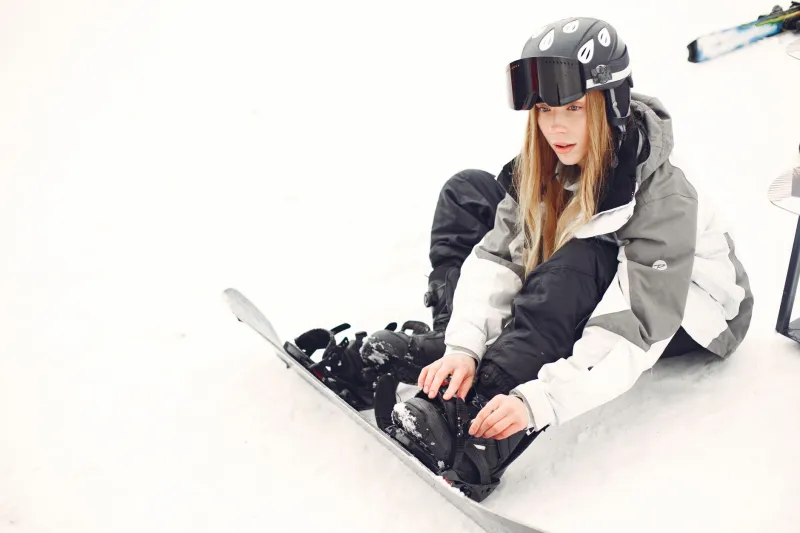
On hard, icy snow, you want a stiffer, more responsive setup. Tighten your highback forward lean, reduce any play in your straps, and make sure your heelcup is snug. Ice demands precision. Any slop in your binding system translates directly into missed edge engagement and washed-out turns. You need that direct connection between your movement and your board's edge.
In crud or choppy variable snow, you can afford a little more forgiveness. Loosening your forward lean slightly lets your board move more independently underfoot, which actually helps when the terrain is constantly knocking you around. Too stiff in unpredictable snow and you'll be fighting every bump instead of absorbing it.
For powder days, especially if you're on a directional or all-mountain setup, consider increasing your forward lean just a touch to help keep your nose up, while keeping your rear foot slightly more relaxed to allow natural flex through the tail. The goal is float, not lock.
One thing to check no matter what conditions you're riding: make sure your baseplate screws are fully tightened. Vibration loosens them over time, and a binding that shifts mid-run is a setup problem that no amount of technique will fix.
Stance Width: Subtle Shifts, Real Impact
Most riders set their stance once at the start of the season and never touch it again. That's leaving performance on the table.
For icy, technical terrain, bring your stance in slightly narrower than your default. A narrower stance lowers your center of gravity and gives you more precise control over edge-to-edge transitions. It's a small change — we're talking maybe half an inch on each side — but it makes carving on hard snow noticeably cleaner.
For deep powder, crud, or anything that demands more physical stability and balance, widen your stance out a bit. A wider base gives you more lateral stability when the snow is pushing back unpredictably, and it helps you stay balanced when you're absorbing variable terrain rather than carving clean lines.
For spring slush, keep your stance at your natural width but pay attention to your weight distribution. Slush tends to catch your nose, so staying slightly back — not dramatically, just aware — helps you stay on top of the snow instead of plowing through it.
Build the Habit Before You Need It
The riders who adapt well to changing conditions aren't doing anything magical. They've just built a mental checklist that runs automatically when they step out in the morning.
Before you gear up, ask yourself four things:
- What's the temperature doing — cold, warm, or transitioning?
- What did the overnight weather actually do to the surface?
- What kind of terrain am I riding today — groomers, off-piste, park?
- When did I last wax, and does my base look dry or discolored?
That four-question check takes maybe 60 seconds, and it tells you everything you need to know about whether your current setup matches the day ahead.
The best days on snow rarely come from perfect conditions. They come from riders who were ready for whatever the mountain decided to throw at them. Get your setup dialed, stay curious about what the snow is telling you, and you'll ride better on the worst forecast day than most people do on a bluebird powder morning.
That's the real edge.