Lost in Translation: Why Your Body Says Stomp and Your Board Says Maybe
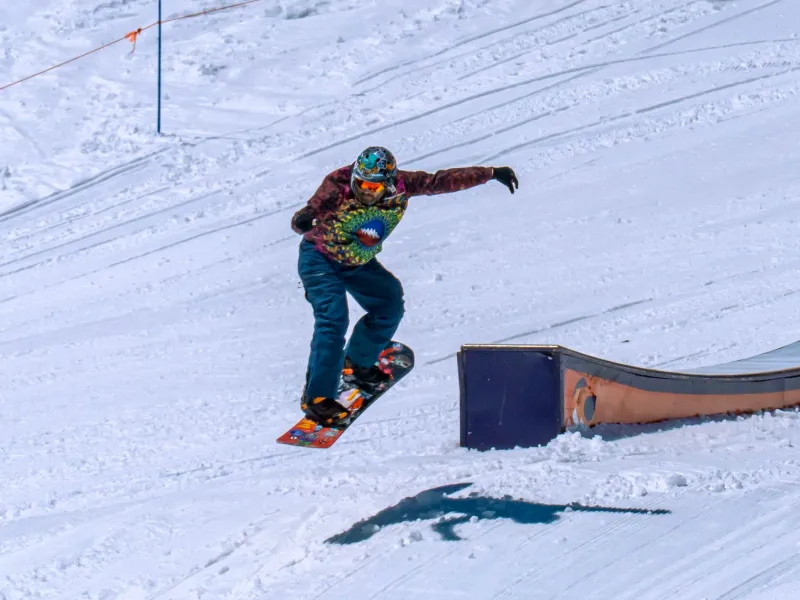
You've been working on that jump for three sessions. The approach is dialed, your pop feels right, and you're committing to the landing. But the moment your board hits the snow, something's off. There's a weird half-second where nothing feels connected — like you're riding on a delay. You stomp, but the board responds late. You absorb, but the energy goes somewhere unexpected.
Welcome to the stomp gap. It's one of the most underdiagnosed problems in recreational snowboarding, and almost nobody talks about it in practical terms.
What the Stomp Gap Actually Is
At its core, the stomp gap is the lag between what your body intends at landing and what your board actually does. Think of it like input latency in a video game — your controller sends the signal, but the screen responds a half-beat late. In snowboarding, that delay can mean the difference between a clean stomp and a sketchy, off-balance scramble to recover.
The gap isn't one single thing. It's a combination of three overlapping mechanical and biomechanical factors that interact in ways most riders never isolate or examine.
Factor one: binding flex and energy transfer. Your bindings are the physical bridge between your boots and your board. When you land, the force travels from your feet, through your bindings, into the deck. But if your bindings have a lot of built-in flex — especially in the highback — they absorb and delay that energy transfer. Softer bindings are great for buttering and jibbing, but they can introduce a mushy, imprecise feeling on hard landings because the flex has to compress and rebound before the board "receives" the full input.
Factor two: boot responsiveness lag. Your boots have their own stiffness profile, and that profile changes depending on temperature, liner break-in, and lacing tension. A cold boot that hasn't warmed up yet behaves completely differently than the same boot after an hour of riding. The liner compresses, the shell flexes, and if your lacing isn't dialed for your foot shape, there's micro-movement inside the boot that creates its own internal delay. Your foot moves, but the boot shell catches up a split second later. That gap stacks on top of the binding flex.
Factor three: micro-movement in the stance. This one is trickier because it's biomechanical rather than purely gear-related. If your binding angles or stance width aren't matched to your natural body mechanics, your joints compensate on landing. Your knees track inward or outward slightly, your hips shift to rebalance, and your ankles work overtime trying to stabilize. All of that compensation introduces movement that isn't directed into the board — it's just noise in the system. The board gets a confused, diluted version of the input your body intended to send.
Why Some Setups Make It Worse
Certain gear combinations are basically stomp-gap machines. A soft boot paired with a soft binding on a flexy all-mountain deck might feel incredible for casual groomers, but stack a jump on top of that and you've got three layers of energy absorption fighting your landing.
On the flip side, ultra-stiff setups have their own issues. A race-stiff boot in a locked-down binding transmits energy fast, but if your body mechanics aren't clean — or if your stance angles are even slightly off — that stiffness amplifies every imperfection rather than smoothing it out. The gap doesn't disappear; it just changes character.
The sweet spot is a matched system: boot stiffness, binding response, and board flex working in the same direction. Most riders build their setups piece by piece without thinking about how the components interact under impact load, and that's where the gap creeps in.
How to Diagnose Your Personal Stomp Lag
The good news is you don't need a lab to figure out where your gap lives. Here are three practical tests you can run on the hill.
The flat-ground drop test. Find a small, safe drop — nothing more than two or three feet — and focus exclusively on the moment of impact. Don't think about style or form. Just land and notice: does the board feel like an extension of your body, or does it feel like something you're standing on top of? A connected landing feels immediate and grounded. A laggy one feels like the board is catching up to you.
The cold-to-warm comparison. Pay attention to how your landings feel during your first few runs versus after you've been riding for 45 minutes. If your early runs feel noticeably worse and improve as you warm up, boot responsiveness lag from cold liners is a major factor. That tells you to look at liner quality, lacing system, and whether your boot stiffness rating actually matches your riding style.
The highback lean test. Loosen your highback lean angle all the way, take a few runs, then tighten it up and compare. If tightening the lean dramatically improves how your landings feel, your bindings were absorbing too much of your input through an underloaded highback. That's fixable with a simple adjustment — no new gear required.
Closing the Gap Without Rebuilding Your Whole Setup
Before you spend money, work through the adjustable variables first. Highback lean angle, forward lean, strap positioning, and stance width are all free adjustments that can meaningfully change how energy transfers on landing. A lot of riders are riding with highbacks that are essentially flopping around doing nothing, and tightening that lean alone can feel like a completely different setup.
If your boots are the culprit — especially if they're older and the liner has packed out — try relacing with more tension through the ankle zone specifically. The ankle is the primary energy transfer point, and a sloppy fit there bleeds more energy than almost anything else.
For riders who've been on the same boot-binding combo for a few seasons and feel like their landings have gotten progressively less satisfying, liner pack-out is worth a serious look. Liners compress over time, and what felt snug three seasons ago may now have a quarter-inch of slop that's quietly wrecking your board feel.
The Bigger Picture
The stomp gap is really a conversation about how well your gear communicates your intent to the snow. When that communication is clean and immediate, riding feels effortless — like the board is reading your mind. When there's lag in the system, you work twice as hard for half the result, and your confidence on bigger features takes a hit that's hard to explain but easy to feel.
The mountain doesn't care about your setup. It's going to keep doing what it does. But understanding the mechanical and biomechanical chain between your body and your board gives you the tools to close that gap and ride with the kind of precision that makes the whole thing feel worth it.
Diagnose it. Adjust it. Then go stomp it for real.